
Homemade Spaghetti Noodles
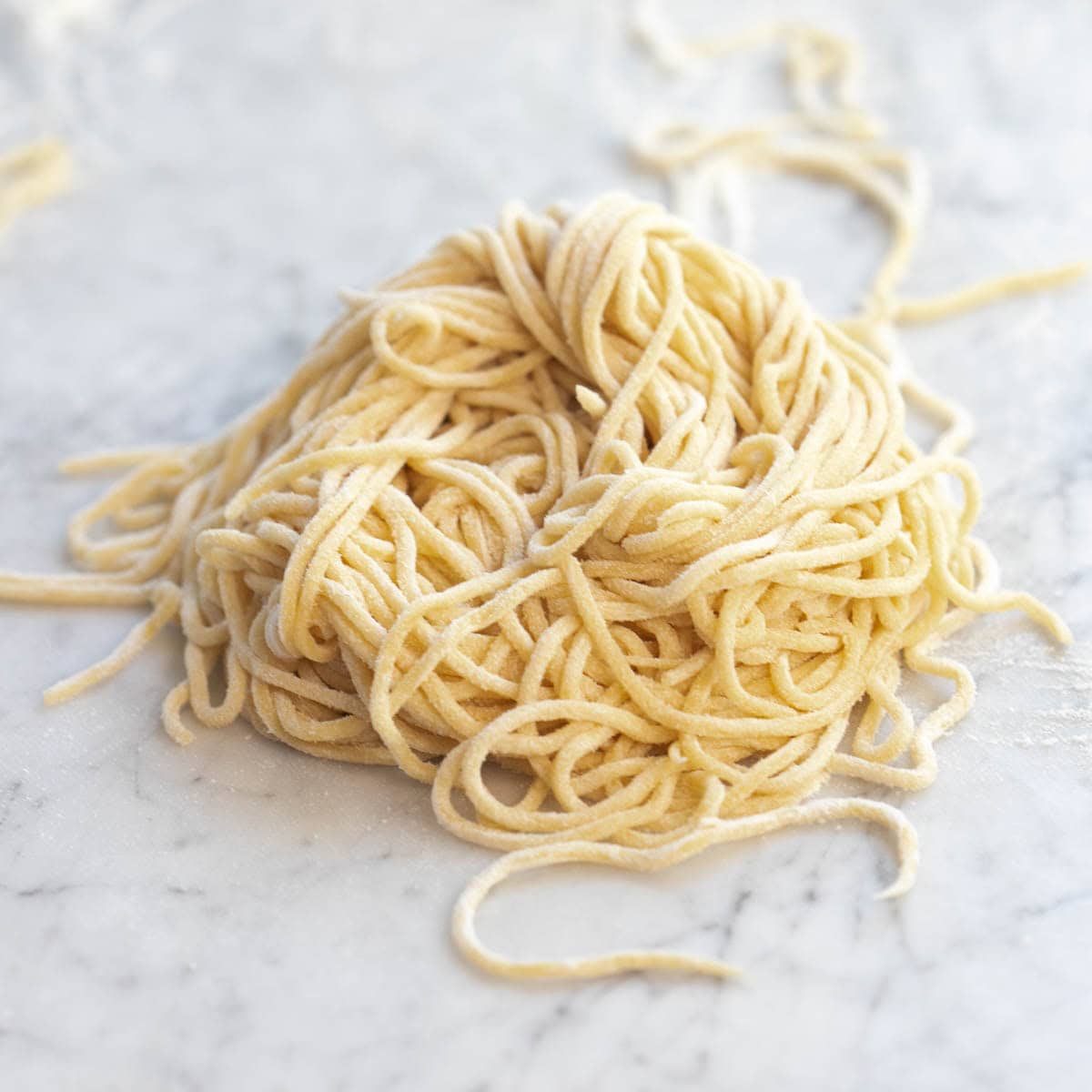
Homemade spaghetti noodles melt in your mouth and only require two ingredients: whole eggs and flour. To make spaghetti noodles from scratch, you will also need a pasta machine to roll out the pasta sheets and a spaghetti attachment to cut the pasta.
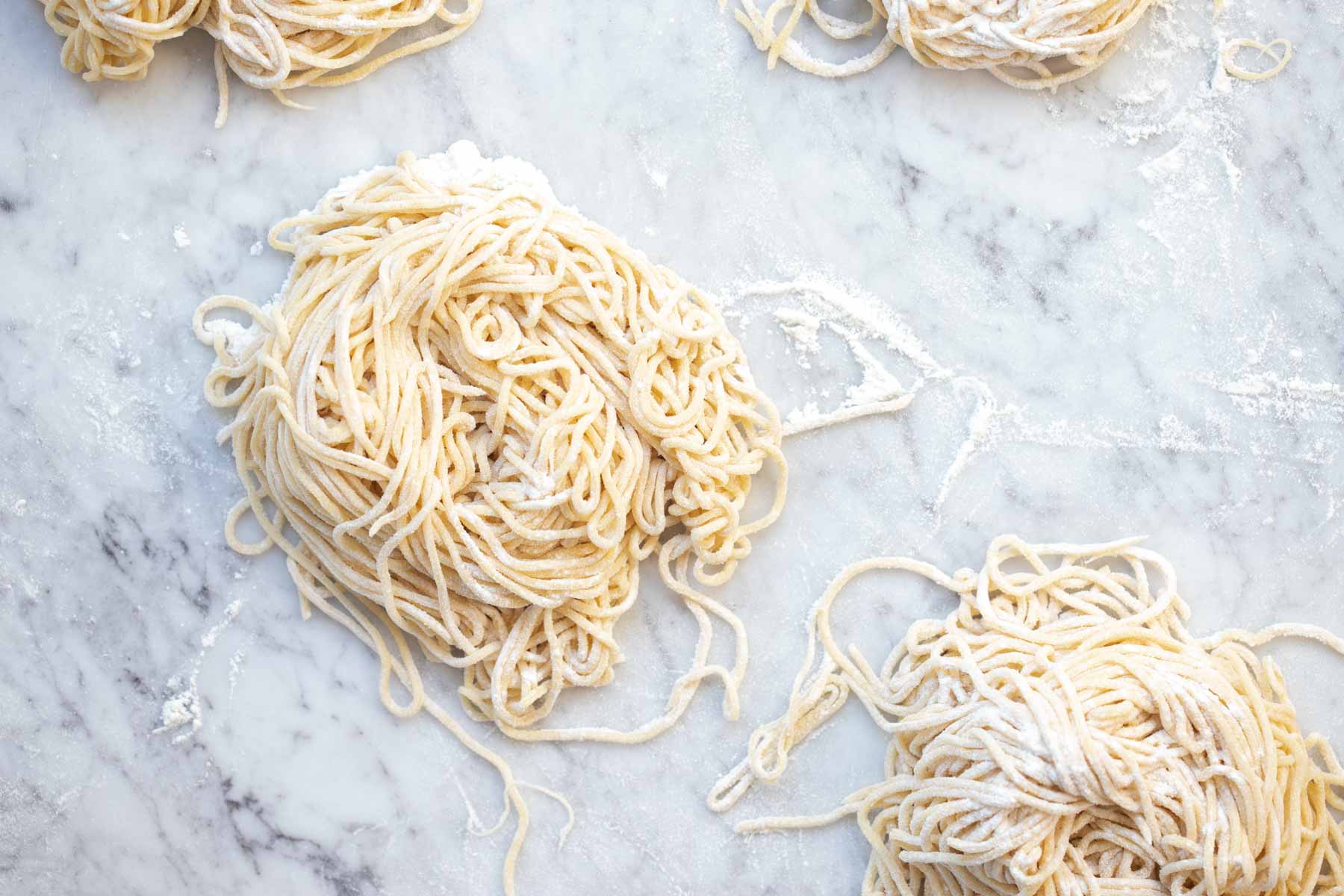
After making fresh pasta sheets for my Italian Lasagna al Forno recipe (and they turned out great, btw), I decided to venture into more homemade pasta territory: homemade spaghetti noodles and homemade fettuccine noodles. If you'd like to try a homemade pasta recipe without needing a pasta machine, try this potato gnocchi or sweet potato gnocchi.
Why Fresh Pasta is Better
If you are busy and can't make pasta from scratch, I get it. But if you have the time and equipment to make fresh pasta, it's worth it. Not only is the pasta more delicate and melts in your mouth, but it also absorbs pasta sauce better. When I take the time to make pasta, I will triple-batch it and freeze it for future pasta nights.
And for some reason, pasta making is therapeutic. It's nice to put some relaxing music on and work with my hands. The end result (yummy pasta!) is just a bonus.
Egg Pasta Ingredients
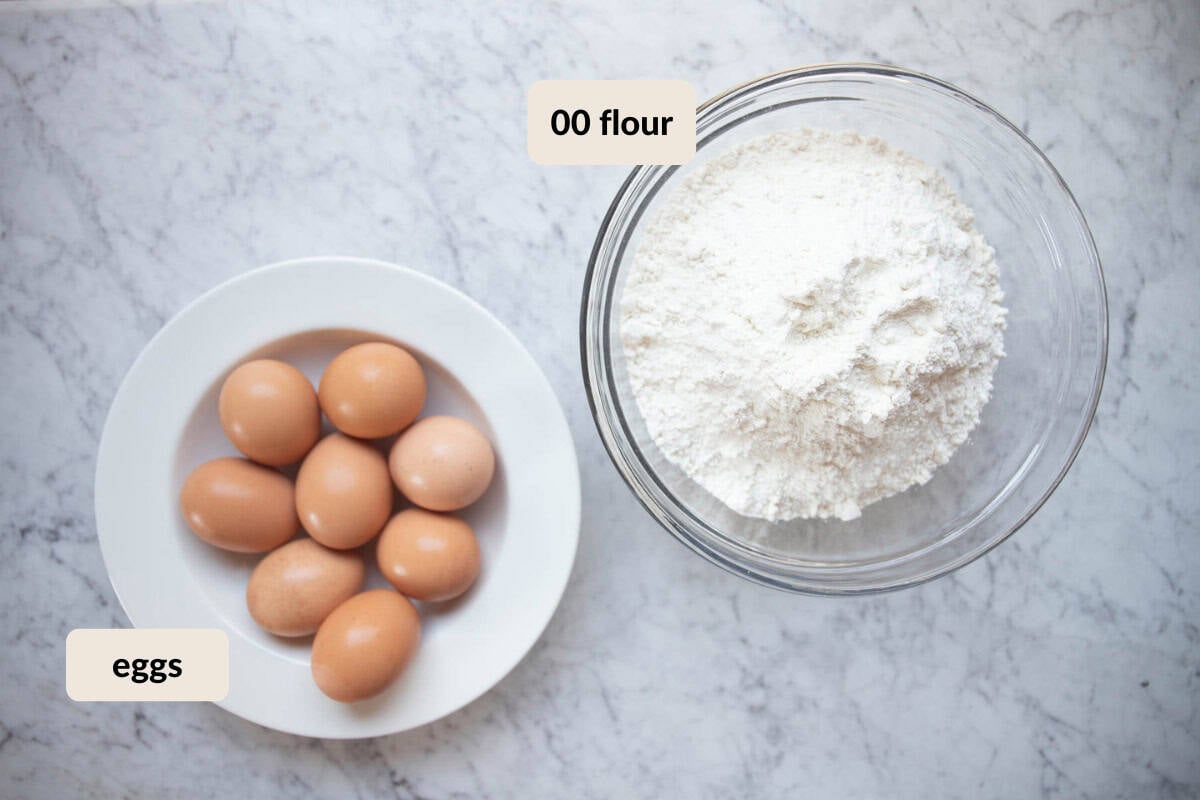
00 flour is preferred because it's milled finer and the gluten content allows the dough to be more elastic. I've also made this pasta with bread flour and all-purpose flour, so if that's what you've got on hand, it's fine. 00 flour is also great for pizza dough.
I consulted the Pasta Grannies cookbook for egg to flour ratios, and I agree that one person is about an egg and 100 grams of flour. So for eight people, I use eight eggs and 800 grams of flour.
Pasta Machines
You will absolutely need a pasta machine to roll out the dough and cut the spaghetti noodles. I have the Marcato Atlas 150 pasta machine with a hand crank and the KitchenAid Standing mixer with KitchenAid pasta attachment. I prefer the KitchenAid pasta attachment set-up because my standing mixer automatically turns the pasta rollers. It allows me to use both hands to feed the pasta sheets.
With the Atlas machine, you need two people: one person to turn the crank and the other to feed the pasta sheets. However, the Atlas machine is considerably cheaper than the KitchenAid standing mixer and pasta attachment setup.
How To Make Spaghetti Noodles From Scratch
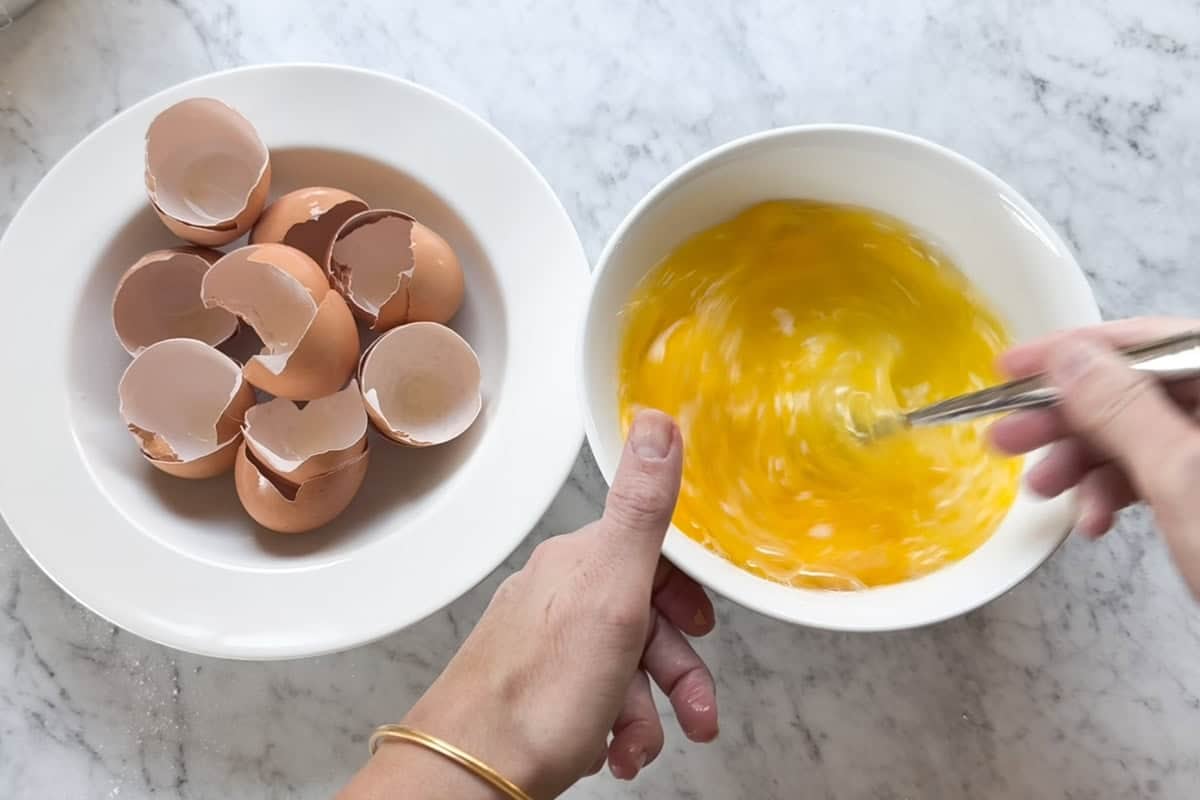
Make the pasta dough. Measure out the flour with a kitchen scale. Mix the eggs in a separate bowl.
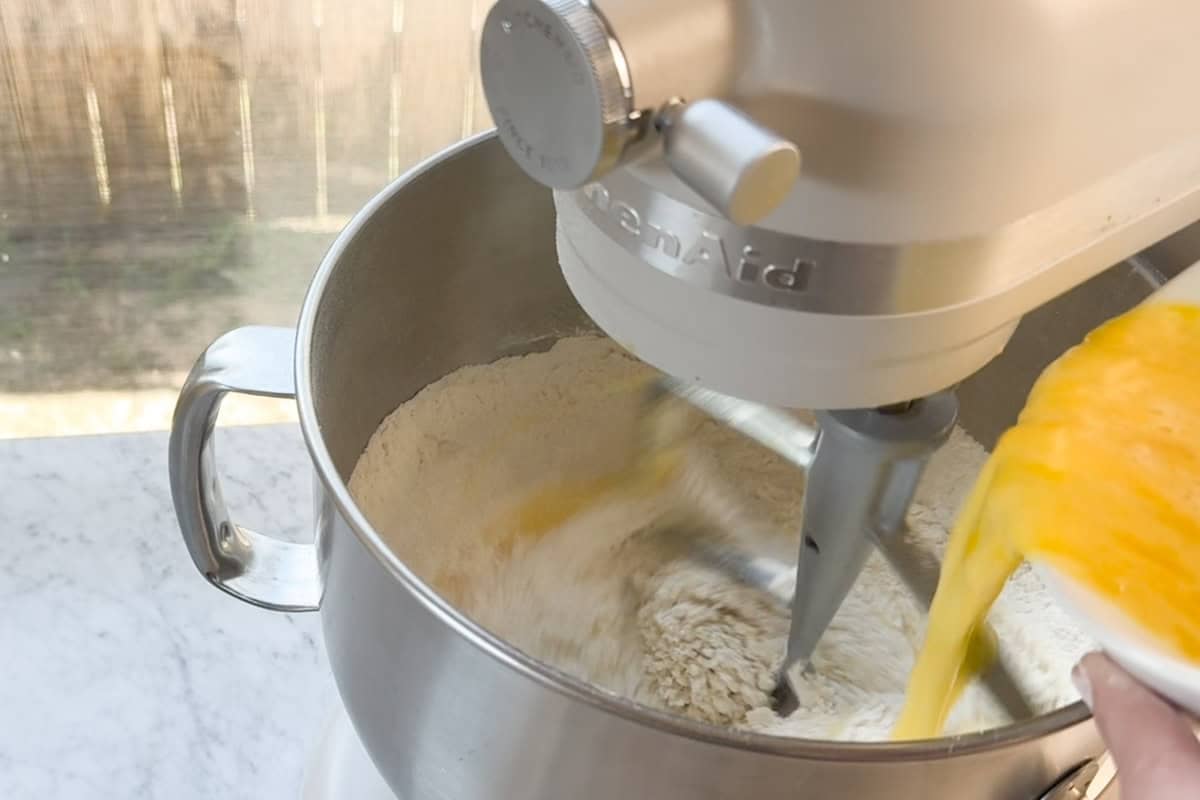
Pour the egg mixture into the flour. Mix until the dough forms.
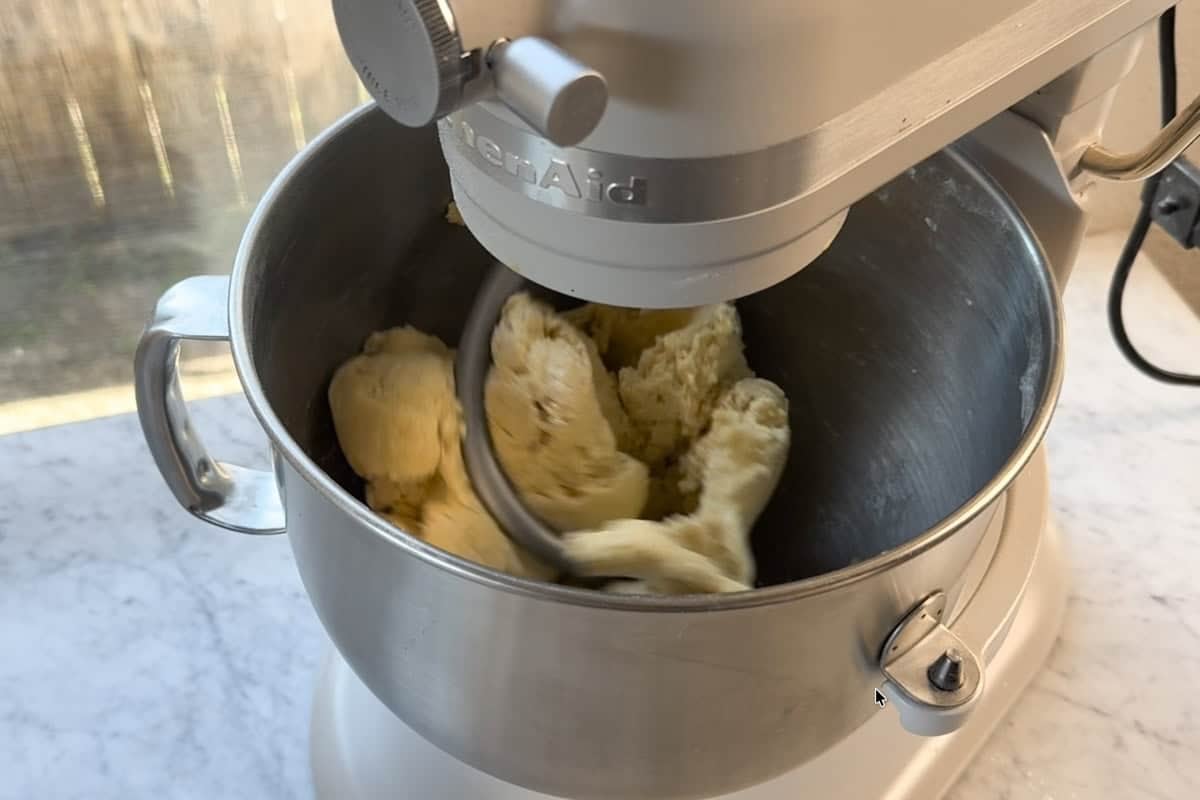
The dough is thick, so knead it with a dough hook for 10 minutes.
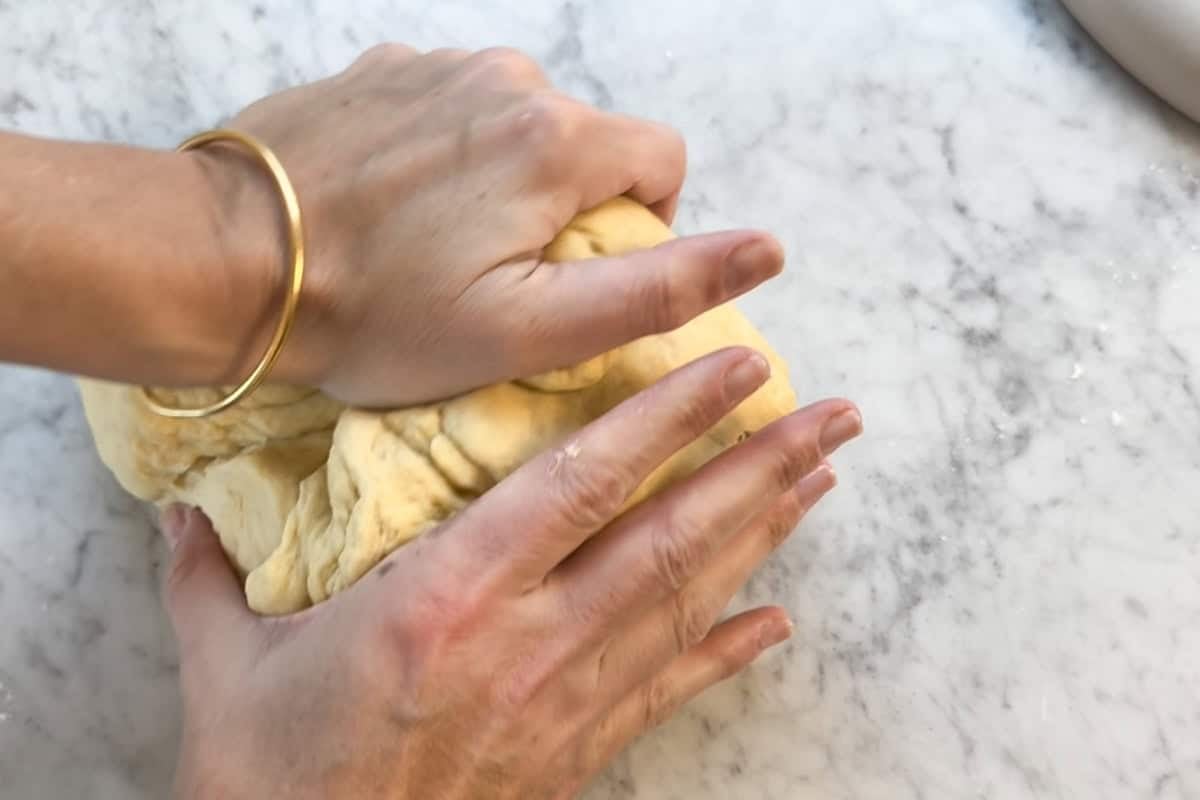
If your standing mixer struggles to knead the thick dough, knead the dough with your hands.
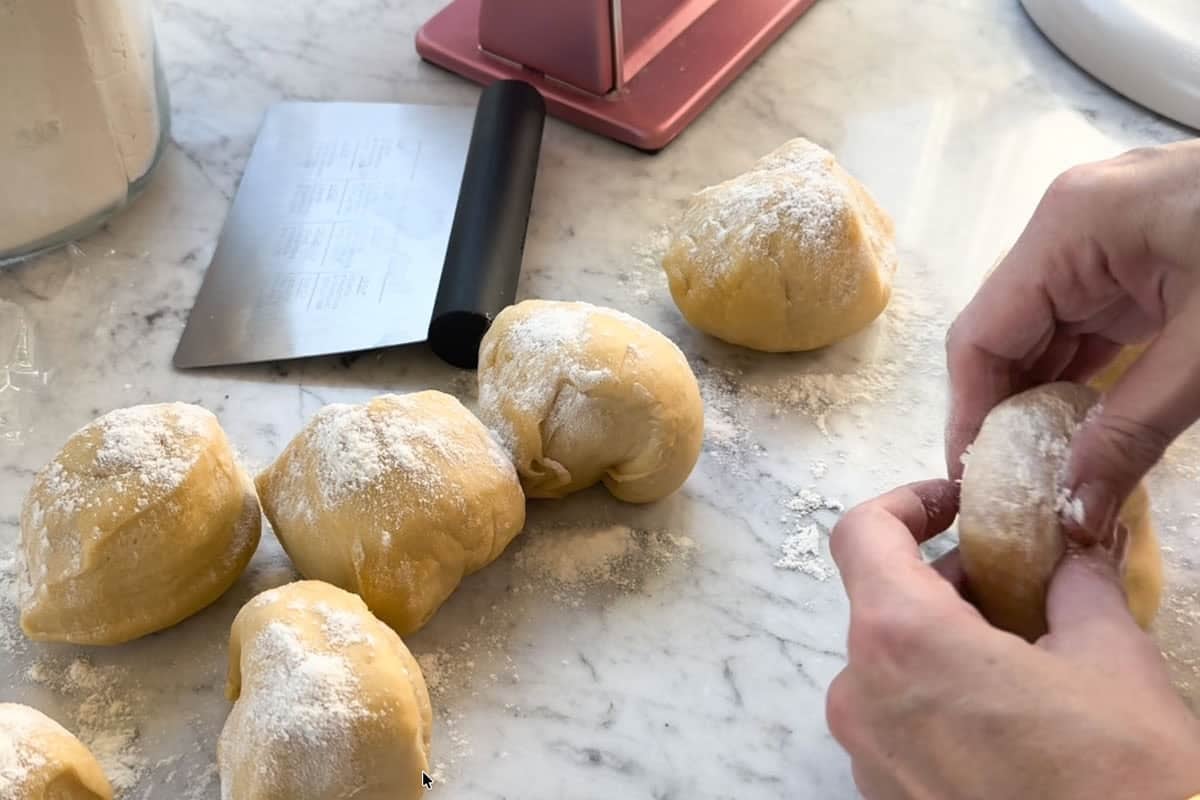
Cut the dough into sections. If I make dough for 8 people, I will cut the dough into 8 sections. Dust the dough with flour and flatten one of the dough balls.
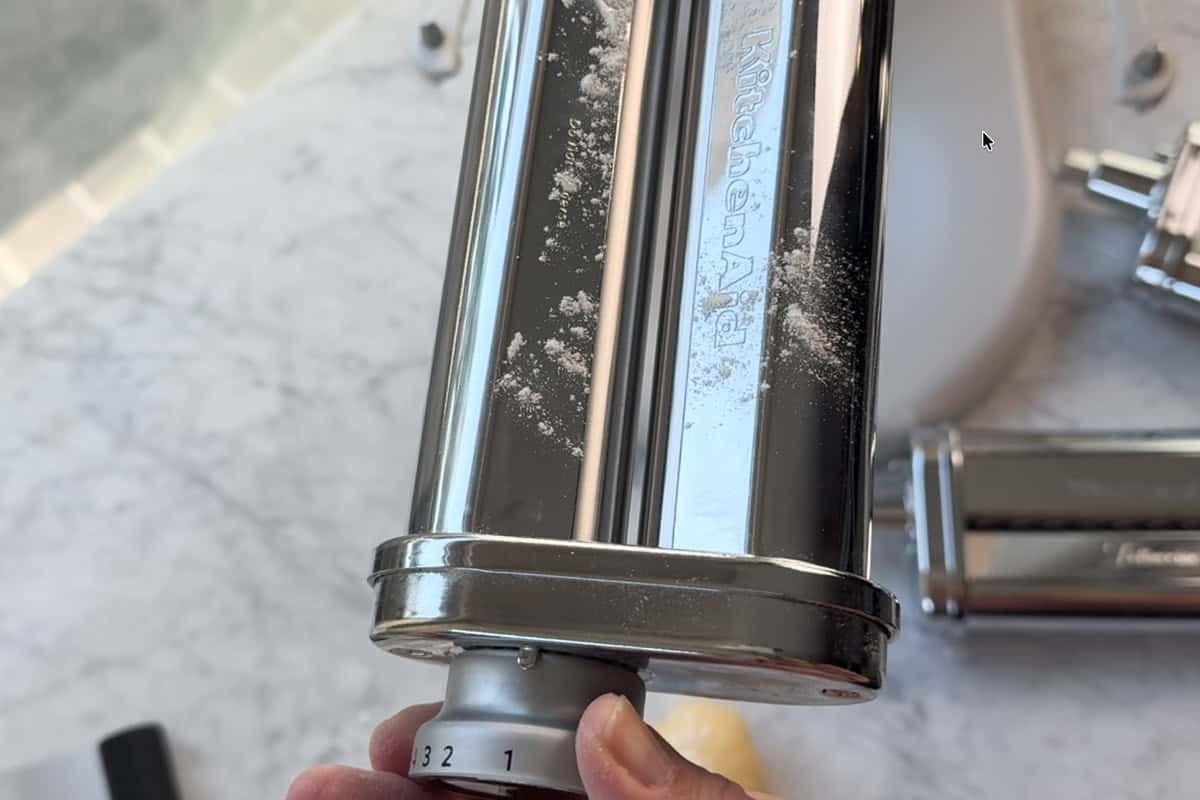
Set the pasta roller to the widest setting. For a Kitchenaid attachment, set it to 1. For the Marcato Atlas pasta machine, set to 0.
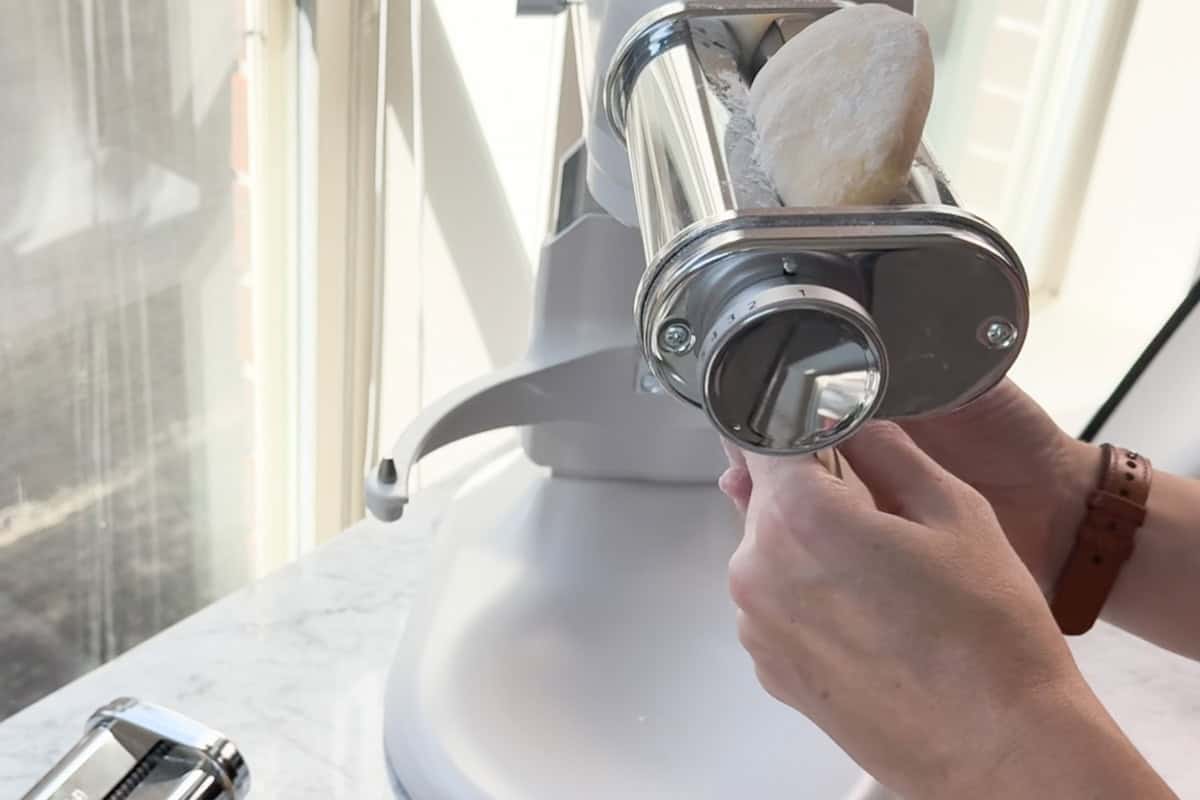
Make pasta sheets. Roll the dough through the widest setting. Repeat. Move the pasta roller to the next setting so the rollers get closer together. Let the dough roll through the pasta rollers twice again. Repeat until the pasta sheet is rolled out on setting 5.
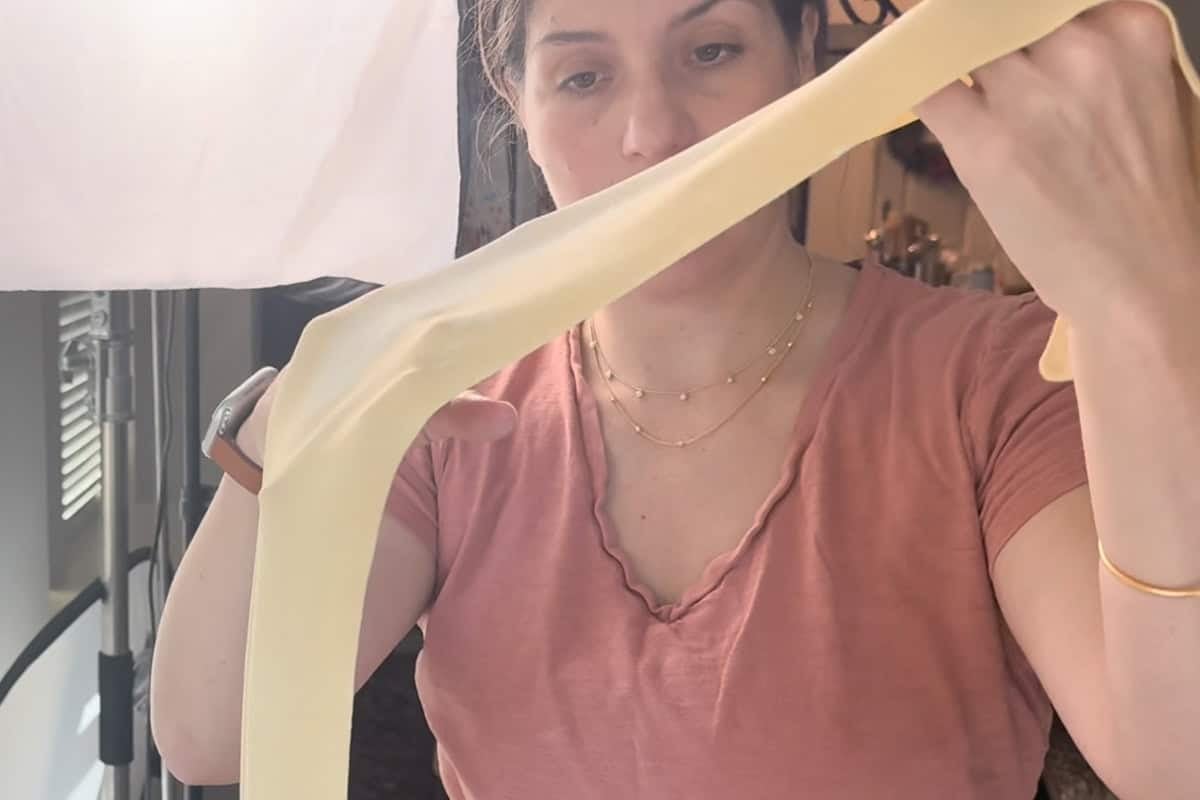
The pasta sheet will be slightly delicate. Dust it with some flour so it doesn't stick. Cut the pasta sheet into foot-long sections and set aside.
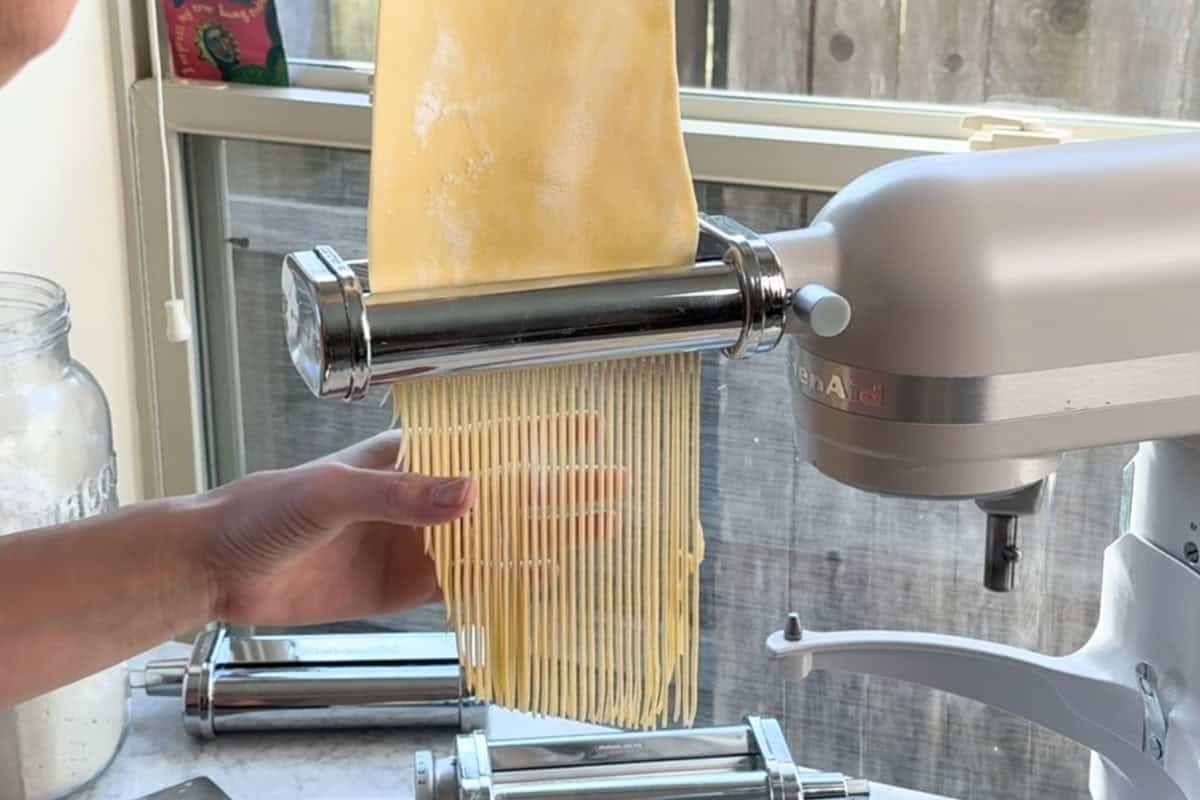
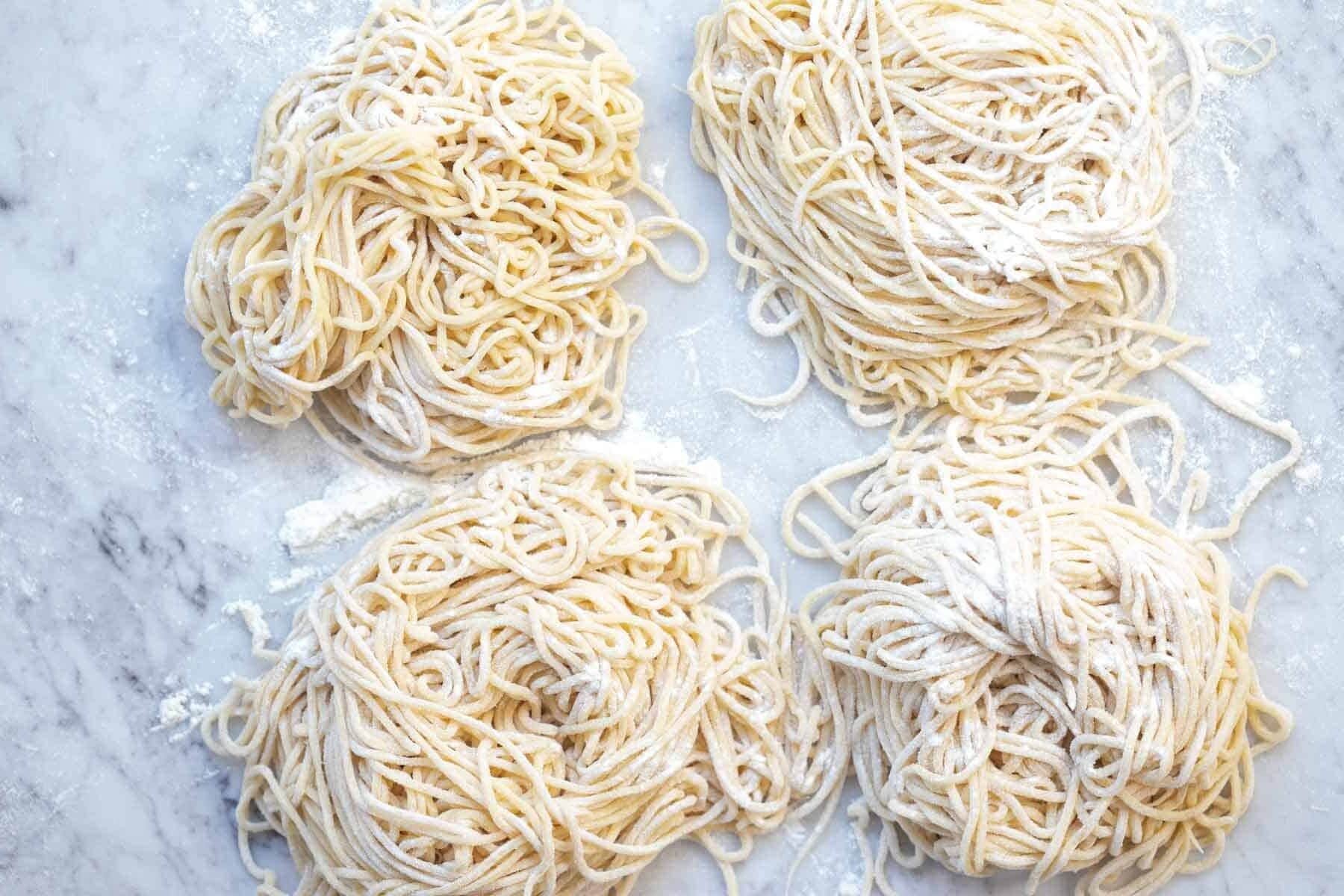
Attach the spaghetti attachment. Roll the pasta sheet through the spaghetti attachment. Immediately dust the spaghetti noodles with flour so they don't stick together.
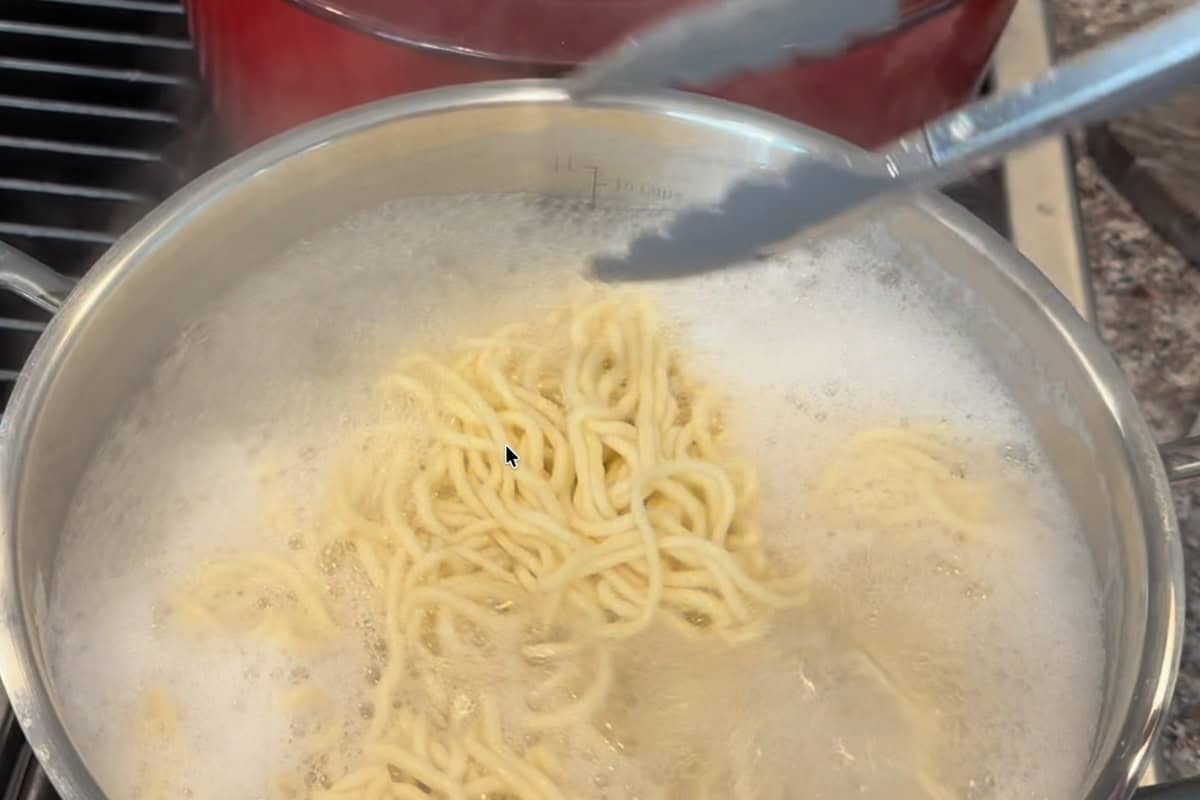
Bring a large pot of water to a boil. Add a generous amount of salt. Boil the fresh spaghetti noodles for about three to five minutes (or until they float to the top). Strain and serve immediately with some pasta sauce!
Making the Pasta Dough Without a Standing Mixer
If you do not have a standing mixer, make the pasta dough on your counter.

Make a well with the flour and crack the eggs in the well.

Using a fork, mix the eggs and fold in the flour.

Gradually fold in more flour until dough forms. I explain this method in more details for my homemade lasagna sheets.
How To Freeze Fresh Pasta
Make sure the dough is dusted with flour so the noodles don't stick together. Place the "spaghetti nests" into a freezer-friendly bag. Store in the freezer for up to 6 months. When you want to cook frozen pasta, don't thaw it. Simply place the frozen pasta noodles directly in boiling water with salt.
What To Serve With Spaghetti
I prefer any tomato sauce, like this ground beef spaghetti sauce or this slow cooker mushroom spaghetti sauce. If you would like a lighter pasta dish, try this garlic butter shrimp pasta recipe. And of course, don't forget homemade garlic bread!
📋 Recipe
Homemade Pasta Spaghetti Noodles
Ingredients
- 4 eggs
- 3¼ cups 00 flour see note 1
Instructions
- Make the pasta dough. Weigh out the flour with a kitchen scale (see note 2). Crack and beat the eggs in a bowl. Add the egg mixture to the flour in a large bowl until a thick dough forms.
- Knead the dough. Using a dough hook with a standing mixer or kneading by hand, knead the pasta dough for 10 minutes. Cover the pasta dough with plastic wrap and let sit for 30 minutes.
- Roll the dough into a pasta sheet. Divide the dough into the number of servings. Sprinkle with flour. Press the dough flat. Feed the dough into the pasta machine on the widest setting twice. For a KitchenAid, the setting is 1, and for an Atlas 150, the setting is 0. Repeat until the pasta sheet has run through the machine on setting 5. Dust the pasta sheet with flour and cut into foot-long sections.
- Cut the pasta sheet into spaghetti noodles. Attach the spaghetti attachment. Feed the pasta sheets through the pasta machine so the dough gets cut into spaghetti noodles.
- Boil the spaghetti noodles. Bring a large pot of water to a boil. Generously salt the water. Add the fresh spaghetti noodles. Boil for 3 to 5 minutes or until the pasta floats to the top. Drain and serve right away.

Video
Notes
- 00 flour is preferred, but you can substitute all-purpose flour or bread flour.
- The perfect ratio of egg to flour is one whole egg to 100 grams of flour. This is one of the most critical parts of making pasta. Too much flour and the dough is dry. Too little flour and the dough is sticky.
this was great very great I loved it so much
Thanks for the comment Ray!
Dough is thick but not sticky. I was afraid it would be hard to move through the pasta machine. T did just fine and the noodles were great. They stick together if you don’t add flour right after they are cut. Glad I tried this
Thanks for the comment Becca!